

Vinyl siding was designed to be low-maintenance and long-lasting and when it was installed correctly and has been in good shape, it often is. But nothing lasts forever, and in Richmond VA's climate with hot, humid summers, occasional severe storms, and winter freeze-thaw cycles vinyl siding takes a real beating over the years. Eventually, every home reaches the point where maintenance isn't enough and full replacement is the right call.
At Elmans Contractors, we've replaced siding on hundreds of homes across Richmond, Chesterfield County, Henrico County, Midlothian, Chester, and Colonial Heights. This guide covers everything Richmond homeowners need to know before starting a vinyl siding replacement project.
Quality vinyl siding, when properly installed, typically lasts 20 to 40 years. The wide range depends on several factors: the thickness and quality of the original siding, the quality of the installation, how much UV and weather exposure the home receives, and how well the siding has been maintained over the years.
Cheaper, thin-gauge vinyl often shows significant wear by the 15-20 year mark. Premium thick-gauge vinyl, properly installed with appropriate moisture barriers, can genuinely last 30-40 years before replacement becomes necessary.
If your home was built between 1980 and 2005 and still has its original siding, it's worth having a professional evaluate its condition even if it looks okay from the street.
Vinyl expands and contracts significantly with temperature more so than fiber cement or wood. Over time, this thermal movement causes panels to warp, buckle, or pull away from the wall. Warped siding isn't just cosmetic: it creates gaps that allow water and moisture to penetrate behind the siding and into your wall assembly. Once that happens, you're at risk for insulation damage, rot, mold, and structural issues.
All vinyl fades over time it's an inherent limitation of PVC plastic exposed to UV light. Moderate fading is cosmetic, but severe, uneven fading (especially when the surface feels chalky or powdery to the touch) indicates the siding is breaking down at the molecular level. At this stage, the material has lost much of its structural integrity, and painting over it is only a temporary fix.
Vinyl becomes brittle as it ages, especially in cold temperatures. A hard impact from hail, a stray branch, a wayward baseball can crack brittle older vinyl. A few isolated cracks can sometimes be repaired, but widespread cracking or multiple missing panels usually indicate the siding as a whole is at end of life.
One of the most serious warning signs is soft spots on your exterior walls areas where the sheathing beneath the siding has been damaged by moisture intrusion. If you press on the wall and feel give or sponginess, moisture has gotten behind the siding and begun rotting the structure. This requires immediate attention, and replacement should include repairing the underlying damage before new siding goes on.
Older vinyl siding with compromised seams, gaps, and deteriorated housewrap provides little insulation value. If your energy bills have been creeping up and you can't explain it, your exterior envelope may be the culprit. Modern siding systems especially those installed with rigid foam insulation can meaningfully improve your home's energy efficiency.
If you're patching, caulking, and repairing your siding every year, the cumulative cost of those repairs often equals or exceeds the cost of full replacement without actually solving the underlying problem. At some point, continued maintenance stops making financial sense.
Understanding what the replacement process involves helps you plan and set expectations. Here's how a professional vinyl siding replacement typically unfolds:
Before any work begins, a reputable contractor will thoroughly inspect not just the siding itself, but the condition of the housewrap, sheathing, and any trim or flashing. This assessment determines whether substrate repairs are needed before new siding goes on and skipping this step is a red flag in any contractor.
You'll choose your new siding material, profile, and color. If you're replacing vinyl with vinyl, you'll have options ranging from standard lap siding to Dutch lap, beaded, or board-and-batten styles. If you're considering upgrading to James Hardie fiber cement during the replacement which many Richmond homeowners do this is the time to evaluate that option as well.
The old siding is removed panel by panel. This is when any hidden damage becomes visible rot in the sheathing, deteriorated housewrap, failed flashing around windows and doors. A thorough contractor documents and discusses any findings before proceeding.
Any damaged sheathing is replaced, and new housewrap or moisture barrier is installed. This step is critical it's what prevents moisture intrusion in your new siding system. Skipping or cutting corners here is the #1 cause of premature siding failure.
New siding panels are installed following manufacturer specifications, including proper nailing patterns that allow for thermal expansion. Trim, corner posts, J-channels, and flashing are installed around windows, doors, and penetrations. Every detail matters: improper installation voids warranties and creates future problems.
A professional crew completes a thorough final inspection, addresses any punch-list items, and removes all debris and old materials from the property. You should receive documentation of the work completed and warranty information for both the materials and the installation.
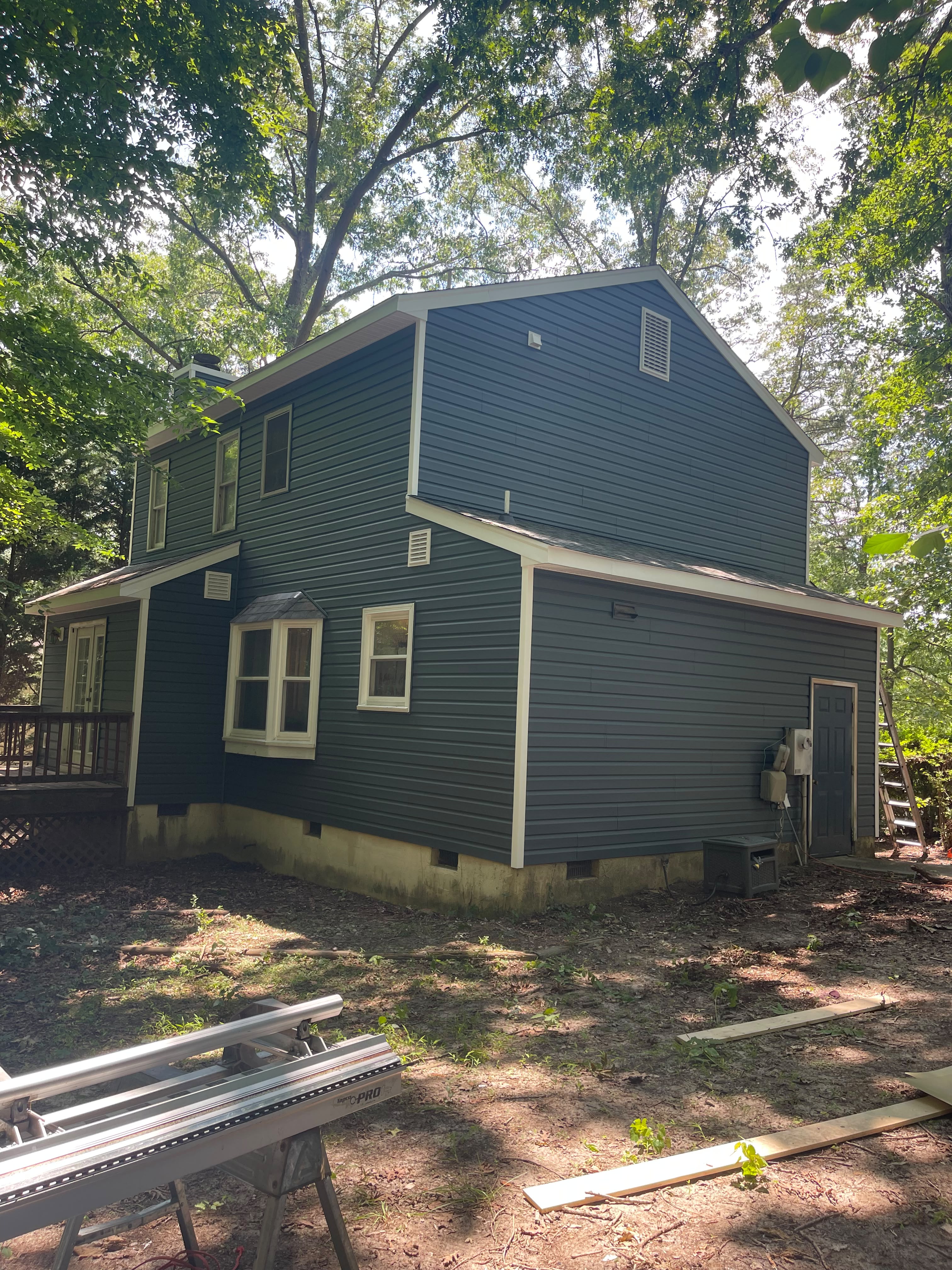
Vinyl siding replacement costs in the Richmond area vary based on home size, siding profile, substrate condition, and the scope of any repairs needed. General ranges:
These are installed costs. Be cautious of bids significantly below these ranges they often reflect thinner-gauge material, cut corners on moisture barriers, or underqualified installers who will cost you more in the long run.
When replacing vinyl siding, Richmond homeowners have a decision to make: stick with vinyl, or upgrade to a higher-performing material.
Replacing with vinyl makes sense if: you're on a tighter budget, you're planning to sell the home in the near term, or the existing vinyl was high-quality and the failure was isolated rather than systemic.
Upgrading to James Hardie fiber cement makes sense if: you plan to stay in the home long-term, you want to maximize resale value, you're tired of vinyl's limitations, or you want a product with a 30-year warranty that's engineered specifically for Mid-Atlantic climates.
James Hardie's HZ5 product line is specifically formulated for the heat, humidity, and seasonal temperature swings of the Richmond VA area. It provides significantly better impact resistance, fire resistance, paint longevity, and curb appeal than vinyl at a higher upfront cost that most long-term homeowners find worthwhile.
Elmans Contractors is a James Hardie certified installer, so we can provide detailed, side-by-side comparisons for your specific home and help you make the right decision for your situation.
The quality of your siding installation matters as much as the material you choose. Here's what to look for:
Most single-family homes in the Richmond area can have siding replaced in 3-7 days, depending on the size of the home, complexity of the roofline, and extent of any substrate repairs. Larger or more complex projects may take up to two weeks.
In most Chesterfield, Henrico, and Richmond City jurisdictions, a permit is required for full siding replacement. A reputable contractor will handle the permit process on your behalf. Be cautious of any contractor who says permits aren't necessary it's usually a red flag.
Yes, siding can be installed year-round in Virginia. However, very cold temperatures (below 40°F) require extra care during vinyl installation, as cold vinyl is more brittle and prone to cracking. Experienced crews account for this in their installation practices.
New siding alone provides modest energy efficiency improvement. However, if your old siding had gaps, failed moisture barriers, or deteriorated insulation beneath it, the improvement can be more significant. The biggest energy efficiency gains come when new siding is paired with rigid foam insulation board installed between the sheathing and the new siding.
If damage is isolated to one side or a small section, partial replacement is sometimes possible though matching existing vinyl (especially older, faded vinyl) can be difficult. If the siding is original and 20+ years old, replacing the whole house at once is almost always more cost-effective than doing it in sections over several years.
If your home's siding is showing any of the warning signs described above or if it's simply been 20 years and you're not sure what condition it's in Elmans Contractors is here to help. We'll perform a thorough inspection, give you an honest assessment, and provide a detailed, no-obligation estimate.
Elmans Contractors serves Richmond, Chesterfield County, Henrico County, Midlothian, Chester, Colonial Heights, and surrounding Central Virginia communities. Contact us today to schedule your free estimate.