
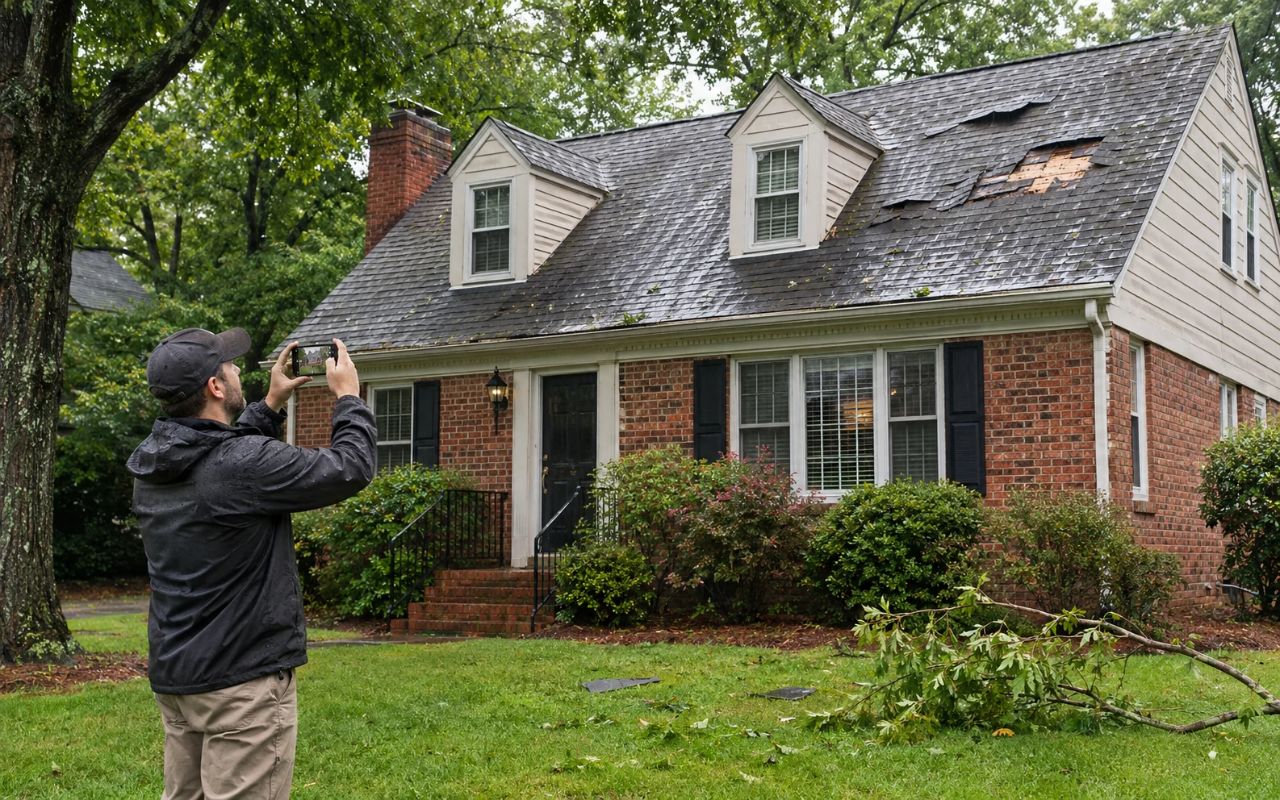
Severe weather can leave a homeowner unsure about what to check, who to call and how quickly to act. If you suspect a storm damage roof in Richmond, VA, begin with personal safety. Then document what happened, prevent additional water entry when it is safe and arrange a professional assessment.
Strong wind, hail, heavy rain and falling branches can affect shingles, flashing, vents, gutters, decking and the roof structure. The steps below will help you respond in an organized way and recognize when the damage may require full replacement.
Do not go outside while thunder, strong wind or falling debris is still present. Wait until local officials and weather reports indicate that conditions are safe. Keep children and pets away from damaged areas around the home.
Look for immediate hazards before approaching the building. Stay away from fallen power lines, leaning trees and loose materials. If you smell gas, see sparks or notice severe structural movement, leave and contact the appropriate emergency service or utility provider.
Do not climb onto the roof. Wet shingles, loose roofing materials and hidden soft areas can make the surface dangerous. A ground-level inspection can provide useful information without exposing you to a fall.
The American Red Cross advises homeowners to examine the outside before entering and watch for utility and structural hazards. Read its guidance on checking a home after a disaster for more safety information.
Walk around the property only when conditions are safe. Stand well back from the house and use your phone camera or binoculars to view the roof. Check every visible slope, but do not stand beneath damaged trees, hanging gutters or loose materials.
Possible signs of roof storm damage include the following.
Check the attic only if it is safe to enter. Use a flashlight rather than a candle or other open flame. Do not touch wet insulation, exposed wiring or a ceiling that is bulging with water. A sagging ceiling can release water or collapse without warning.
Do not ignore small signs. A lifted shingle or damaged flashing point can allow water to reach the decking and insulation even when no active drip is visible.
Good documentation creates a clear record for your contractor and insurance company. Begin before debris is moved or temporary protection is installed, provided that taking photographs does not place anyone at risk.
Take wide photographs of each affected side of the home, followed by closer images. Capture fallen branches, displaced shingles, damaged gutters, ceiling stains and water inside the home.
Record a short video while walking around the property. Keep the original files because their timestamps may be useful later.
Create a written record with the following details.
Do not discard damaged materials until your insurer says they are no longer needed. If something must be removed for safety, photograph it in place first and retain a sample when practical.
Temporary protection is intended to reduce additional damage. It is not a permanent repair and should never require an untrained homeowner to climb onto a damaged roof.
Move valuables away from an active interior leak and place a container beneath dripping water. If a ceiling is bulging, keep people away and seek professional help.
A qualified contractor or mitigation provider may install a temporary covering. The correct approach depends on the roof design, weather and extent of damage. A poorly secured tarp can tear loose or allow more water inside.
The Virginia State Corporation Commission advises property owners to protect a damaged home from further loss, photograph the damage before temporary work and save related receipts. Review the commission’s guidance for homeowners after a disaster before authorizing major work.
Contact a roofing contractor promptly when you see missing shingles, displaced flashing, fallen-tree impact, active water entry, sagging or widespread wind and hail damage. You should also request an assessment when the roof looks normal from the ground but leaks appeared after the storm.
A professional inspection can determine whether damage is isolated or spread across the roofing system. The contractor should evaluate the shingles, flashing, penetrations, roof edges and accessible decking. Ask for photos and a written estimate.
Elmans Contractors focuses on full roof replacements rather than minor roof repairs. If the storm caused widespread damage or exposed an aging roof that is no longer a sound candidate for repair, review our roofing services in Richmond, VA. We can inspect the system, document visible conditions and prepare a replacement estimate when replacement is appropriate.
If only a small repair is needed, contact a qualified roof repair provider. Choosing the correct service can save time and prevent a temporary patch from being mistaken for a lasting solution.
Read your policy and contact your insurance company or agent as soon as practical if you may file a claim. Ask about the reporting deadline, deductible, covered causes of loss and the steps required before permanent work begins.
Provide accurate information without guessing about the cause or value. Share your documentation when requested. Record the representative’s name, date and claim number after each conversation.
Coverage depends on the policy, cause, exclusions and insurer’s investigation. A contractor can document roof conditions, explain proposed work and communicate technical details to an adjuster. The contractor cannot determine coverage or guarantee approval.
Virginia’s Bureau of Insurance recommends notifying the insurer promptly, protecting the property from further damage and retaining records of emergency expenses. Homeowners can read the Virginia homeowners insurance guide for more information.
Not every damaged roof needs replacement. However, a storm may reveal broader problems that make isolated work less practical. The roof’s age, existing wear, affected area and condition of the decking all matter.
Replacement may deserve consideration when the following conditions are present.
A contractor should explain the findings and show you affected areas. Be cautious about anyone who recommends replacement without an inspection or pressures you to sign immediately.
Act promptly without rushing important decisions. Do not climb onto the roof, make permanent changes before documenting the loss or assume that every visible mark is insured.
Do not sign over an insurance check to an unfamiliar contractor. Ask for a written scope, payment schedule, warranties and proof of licensing and insurance.
Avoid high-pressure sales tactics or promises of a free roof. No contractor controls an insurer’s decision. A professional should provide evidence and allow time to review the proposal.
Wait until conditions are safe and inspect only from ground level. Contact a professional promptly for active leaking, fallen-tree impact, sagging or missing materials.
You may contact both promptly. Your insurer can explain claim requirements, while a contractor can assess and document visible damage.
Use a qualified professional, especially when the roof is wet, steep or structurally damaged. Hidden weak areas can make climbing dangerous.
No. The recommendation depends on the damage, roof age and underlying structure. Elmans evaluates projects that may need full replacement and does not provide minor isolated repairs.
Yes. Elmans can photograph visible conditions, describe the replacement scope, provide an estimate and communicate construction details. The insurer decides coverage and claim approval.
After a severe storm, focus first on safety. Inspect the property from the ground, document every affected area and arrange temporary protection when it can be completed safely. Keep receipts and contact your insurer promptly if you may need to file a claim.
If your storm damage roof in Richmond, VA appears to need full replacement, contact Elmans Contractors for a professional assessment and written estimate. We will explain what we find, document the visible conditions and help you understand the next practical step without making promises about insurance coverage.