
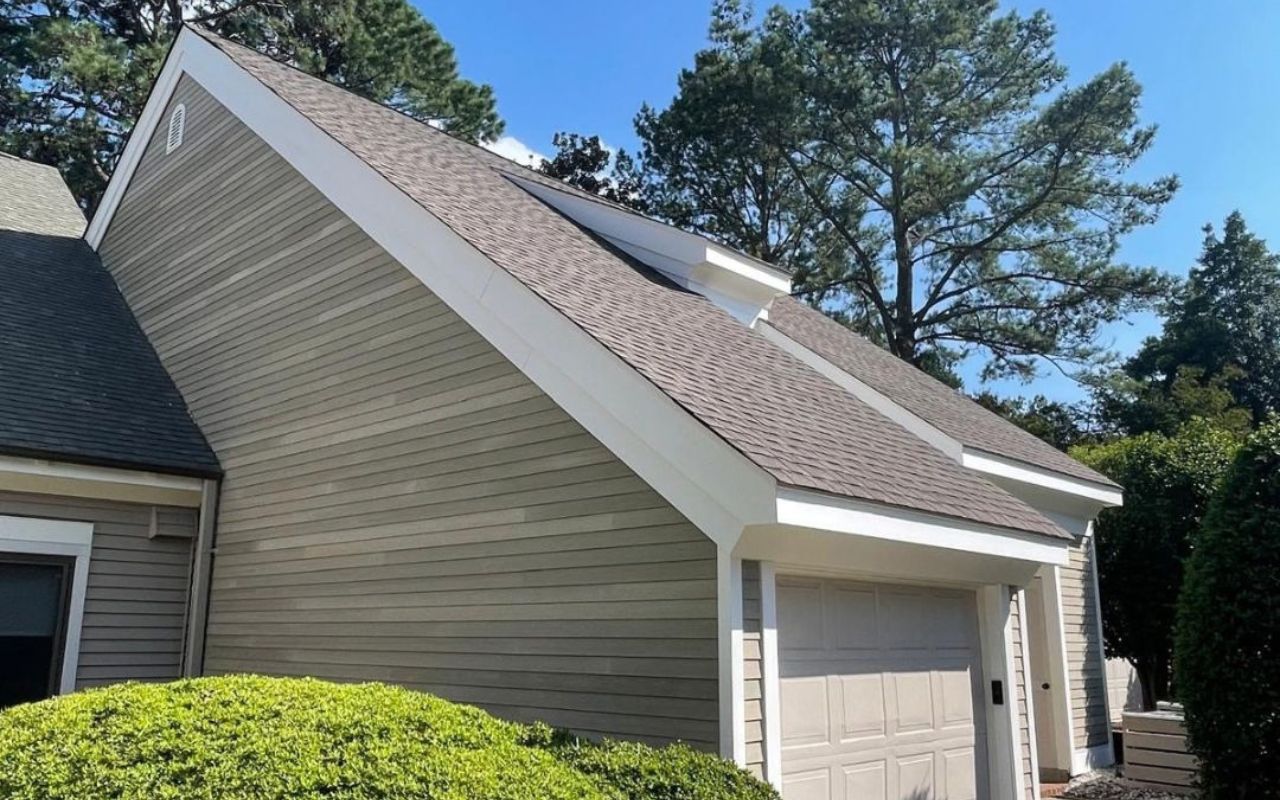
A roof replacement in Richmond, VA may cost approximately $8,000 to $25,000 or more for many residential properties. Smaller asphalt shingle roofs with a simple design may fall near the lower end. Larger homes, complex rooflines and premium roofing materials can cost considerably more.
This is a general planning range rather than a guaranteed price. The final cost depends on the size, slope, material and condition of your existing roofing system. Any damaged decking, flashing or ventilation components can also affect the estimate.
In our experience, homeowners feel more confident when they understand where their money is going. A detailed estimate should explain the materials, labor and preparation required instead of presenting one unexplained total.
Every roof is different, so it is difficult to provide one average price that applies to every Richmond home. A straightforward asphalt shingle roof generally costs less than a designer shingle or standing-seam metal system.
The following figures can help you prepare an initial budget for asphalt shingle replacement.
Replacing a 1,500-square-foot asphalt shingle roof may cost approximately $7,500 to $12,000. A simple roof with easy access and minimal decking damage will usually fall closer to the lower end of this range.
A 2,000-square-foot asphalt shingle roof may cost approximately $10,000 to $16,000 to replace. The final price will depend on the shingle product, roof pitch and condition of the existing structure.
The estimated replacement cost for a 2,500-square-foot asphalt shingle roof may range from $12,500 to $20,000. Complex rooflines, premium shingles and damaged decking can increase the total.
Replacing a 3,000-square-foot asphalt shingle roof may cost approximately $15,000 to $24,000. Larger roofs require more materials, labor, disposal and time to complete safely.
These figures are broad planning estimates based on approximately $5 to $8 per square foot. They are not project quotes from Elmans Contractors. Current material prices, roof complexity and existing damage can change the final amount.
GAF reported that the average roof replacement cost in the United States was $17,631 in 2025. The company also identifies roof size, roofing material, slope and location as important pricing factors.
Homeowners can review the GAF roof replacement cost guide for additional information about the components included in a professional roofing estimate.
Roofing contractors calculate materials using the roof surface rather than the interior floor area of the home. A 2,000-square-foot house does not always have a 2,000-square-foot roof.
Pitch, overhangs, attached garages and additional roof sections affect the total surface area. This is why estimates based only on the home’s floor area can be misleading.
Roofers often use a unit called a roofing square. One roofing square equals 100 square feet of roof surface.
For example, a 2,000-square-foot roof contains approximately 20 roofing squares. Contractors must also allow for ridges, valleys, starter materials and installation waste.
.jpg)
Several factors determine the cost of a new roof in Richmond. Understanding them will help you compare contractors and recognize what is included in each proposal.
Roof size is one of the largest pricing factors. A larger roof requires more shingles, underlayment, flashing, fasteners and labor.
It also produces more debris that must be removed and disposed of. Professional measurements should include every roof section rather than relying on a rough estimate of the home’s size.
A steep roof is more difficult to access and requires additional safety precautions. Installation usually takes longer because materials and workers must move more carefully.
These factors can increase labor costs. Roof pitch may also influence which roofing products and installation methods are suitable for the home.
The shape and design of your roof can have a noticeable effect on replacement costs. A simple gable roof is normally easier and faster to replace than a roof with several intersecting sections.
Dormers, valleys and multiple roof levels require more measuring, cutting and material. Chimneys, skylights and plumbing vents also create openings that roofing crews must carefully seal against moisture.
Wall connections and unusual angles add further complexity. These areas often require custom flashing and more detailed installation work to direct water away from vulnerable sections of the roof.
A complex design may increase both labor time and material use. However, careful work around each opening and transition is essential for preventing leaks and protecting the home from long-term water damage.
The roofing material you choose will have a major effect on the total replacement price. Each option has a different cost, appearance, expected service life and level of maintenance.
Architectural asphalt shingles are a common choice for Richmond homes. They offer a practical combination of durability, attractive design and affordability. Homeowners can also choose from many colors and profiles to complement their properties.
Premium designer shingles usually cost more than standard architectural products. Their heavier construction and distinctive appearance may appeal to homeowners who want a more customized finish.
Standing-seam metal roofing generally requires a larger initial investment. The panels, fastening system and specialized installation all contribute to the higher price. Exposed-fastener metal roofing may be more affordable, but it has different maintenance and performance considerations.
Specialty roofing materials can also be suitable for certain homes, particularly properties with historic or distinctive architectural features. These materials may require experienced installers and additional structural preparation.
The least expensive material is not always the best long-term choice. Consider expected service life, maintenance, warranty coverage, weather resistance and compatibility with your home before making a decision.
A complete Richmond roof replacement normally includes removing the existing roofing material. This process gives the installation crew access to the roof deck.
A roof with one shingle layer is usually easier to remove than one with multiple layers. Additional layers create more labor, disposal weight and cleanup.
Ask whether tear-off and disposal are included in the written estimate. They should not appear as unexpected charges after the project begins.
The roof deck is the wooden surface beneath the roofing system. It provides a stable foundation for the underlayment and shingles.
Leaks and trapped moisture can cause sections of the deck to become soft, rotten or separated. These damaged areas must be replaced before the new system can be installed correctly.
Not all decking damage is visible during the first inspection. We recommend asking how additional wood replacement will be measured and priced if concealed damage is discovered.
A clear proposal should explain the unit price for replacing damaged sheets or boards.
Underlayment creates a secondary protective layer beneath the shingles. It helps manage moisture that gets past the exterior roof covering.
Different underlayment products have different prices and performance characteristics. The amount required depends on the roof area and chosen installation system.
Homeowners should ask which product will be installed instead of accepting a proposal that simply says underlayment is included.
Additional water protection may be installed in vulnerable areas such as valleys, eaves, wall connections and roof penetrations.
These components help protect parts of the roof where water is more likely to collect or enter. The amount required can vary based on the design of the roof.
Water protection is mostly hidden after installation. It remains an important part of the roofing system even though homeowners cannot see it from the ground.
Flashing protects the joints around chimneys, walls, skylights, vents and other roof penetrations.
Old, loose or poorly installed flashing can allow water into the home. Replacing damaged flashing during a roofing project helps reduce the risk of future leaks.
The estimate should explain whether existing flashing will be reused or replaced. It should also identify any special work required around chimneys or skylights.
Ventilation helps control heat and moisture in the attic. An effective system generally uses intake and exhaust ventilation to maintain airflow.
A roof replacement provides a valuable opportunity to inspect the existing ventilation system. If the current design is inadequate, the contractor may recommend adding or modifying vents.
Ventilation improvements may add to the initial price. However, ignoring a known problem may affect indoor comfort and the performance of the new roofing system.
Easy access allows crews to deliver materials and remove debris efficiently. Limited access can increase the time required to complete the job.
Narrow driveways, tight property lines, steep landscaping and nearby structures may require additional planning. Crews may also need extra protection for windows, siding, gardens and outdoor equipment.
These conditions should be discussed during the property inspection.
Asphalt shingles are often the most affordable option for residential roof replacement. Architectural shingles are especially popular because they provide more dimension and durability than basic three-tab products.
The final asphalt shingle price depends on the brand, product line, warranty and installation system. Two estimates may both mention architectural shingles while including products with different features and coverage.
Ask each contractor to identify the manufacturer and exact product line. This makes it easier to compare proposals accurately.
The estimate should also explain the supporting components, including underlayment, starter shingles, ridge caps, flashing and ventilation products.
Metal roofing usually costs more initially than asphalt shingles. The exact price depends on the panel type, metal, fastening system, finish and roof design.
Standing-seam metal systems generally cost more than exposed-fastener panels. Complex rooflines also require more custom cutting and detailed installation.
Some Richmond homeowners choose metal roofing because of its appearance, durability and lower maintenance requirements. However, it may not be the right choice for every property or budget.
A professional contractor should explain the practical differences without pressuring you toward the most expensive material.
Not every roof problem requires complete replacement. A repair may be suitable when the roof is relatively young and the damage is limited to one area.
Replacement may provide better long-term value when the system is old, deterioration is widespread or previous repairs have not solved the problem.
Consider requesting a replacement assessment when you notice:
A trustworthy contractor should explain whether repair remains practical. Homeowners should not be pressured into replacing a roof when a proper repair can provide a reliable solution.
.jpg)
Permit requirements depend on the property and scope of the project.
The City of Richmond identifies replacement of roof covering and replacement of up to 256 square feet of roof decking as ordinary repairs that may not require a building permit. Different rules apply to properties located in City Old and Historic Districts.
Roofing changes in these districts may require additional review or approval. Structural modifications and extensive decking work may also have different requirements.
Homeowners can review the current City of Richmond permit guidance or contact the Permits and Inspections Division before work begins.
Properties in Henrico County, Chesterfield County and other nearby jurisdictions are subject to their respective local requirements.
Homeowners insurance may cover roofing damage caused by a covered event. Examples may include hail, wind or a fallen tree.
Insurance generally does not cover replacement caused only by normal aging, poor maintenance or gradual deterioration. Coverage depends on the policy, cause of damage and insurance company’s assessment.
A contractor can inspect the roof and provide photographs, measurements and a written description of visible damage. The insurance company makes the final coverage decision.
Avoid anyone who guarantees approval before the insurer has reviewed the claim.
A professional estimate should clearly explain the proposed work. It should provide more information than one final number.
Look for the following details.
Ask whether taxes, delivery and any required approvals are included. If something is optional, it should be clearly identified as an additional choice.
The National Roofing Contractors Association homeowner guidance provides further information that can help homeowners make informed roofing decisions.
Comparing only the final prices can lead to the wrong decision. One contractor may include a complete roofing system while another leaves out important components.
Use the following steps when reviewing proposals.
An unusually low price deserves closer examination. It may exclude tear-off, flashing, cleanup or other necessary work.
A complete and clearly written estimate provides greater value than a vague proposal with the lowest starting number.
Many residential asphalt shingle replacements take several working days. A larger home or complex roof may require more time.
Metal systems, steep slopes and hidden decking repairs can also extend the schedule. Weather may cause delays when conditions are unsafe or could expose the home to moisture.
Ask the contractor for an expected schedule before signing the agreement. You should also understand how the home will be protected if the weather changes during installation.
A realistic schedule is better than a promise that does not allow for weather or unexpected repairs.
.jpg)
Start with an on-site inspection and written estimate. An online calculator can provide a general idea, but it cannot evaluate your roof’s actual condition.
Leave some flexibility in the budget for concealed decking damage, especially if the roof has experienced leaks. Ask the contractor to explain how additional work will be approved before it is completed.
You should also decide which features matter most to you. Material, color, warranty coverage and ventilation improvements may affect the final choice.
Taking time to understand these options helps prevent rushed decisions after installation begins.
The roof replacement cost in Richmond, VA depends on your roof’s size, material, design and condition. A general range can help with early planning, but only an inspection can provide a dependable project estimate.
Elmans Contractors evaluates the complete roofing system and explains what the home actually needs. We provide a written scope so homeowners can understand the work, materials and pricing before making a decision.
Learn more about our roof replacement services in Richmond or explore our complete Richmond roofing services.
When you are ready to discuss your property, contact Elmans Contractors to request an on-site estimate.
Many residential roof replacements may cost approximately $8,000 to $25,000 or more. Roof size, material, slope, design and decking condition determine the final price. An on-site assessment is necessary for an accurate estimate.
A 2,000-square-foot asphalt shingle roof may fall within a broad planning range of approximately $10,000 to $16,000. Premium products, complex designs and hidden damage can increase the cost.
No. Contractors calculate materials using the actual roof surface. Pitch, overhangs, attached garages and additional roof sections can make the roof area different from the home’s interior square footage.
A roofing square equals 100 square feet of roof surface. Contractors use squares to calculate the quantities of shingles, underlayment and other materials needed for installation.
Most complete replacement estimates include removing and disposing of the existing shingles. Homeowners should confirm this in writing because additional layers can increase labor and disposal costs.
Asphalt shingles generally have a lower initial cost than metal and many specialty materials. Architectural shingles are a popular option because they balance price, durability and appearance.
It may be possible in limited situations. However, installing over existing materials prevents a complete inspection of the roof deck. Removing the old roof allows damaged wood and other hidden problems to be found.
Insurance may cover replacement when a covered event such as wind, hail or a fallen tree damages the roof. It generally does not cover replacement caused only by age or normal deterioration. The insurance company makes the coverage decision.
Many residential asphalt shingle replacements take several working days. Larger roofs, complex designs, metal systems, bad weather and decking repairs may extend the schedule.
Schedule an on-site inspection with a qualified contractor. The contractor should measure the roof, assess its condition, discuss materials and provide a detailed written proposal.
Replacing a roof is a major home improvement project, but the decision should not begin and end with price.
A properly prepared estimate considers the complete roofing system. This includes the shingles, decking, underlayment, flashing, ventilation and water protection.
The best value usually comes from a clear scope, suitable materials and careful installation. Choosing the lowest bid without understanding what it includes can lead to additional expenses later.
If your roof is aging, leaking or showing visible damage, begin with a professional inspection. It will give you the information needed to plan your budget and protect your home with confidence.